|
Fungi-zette
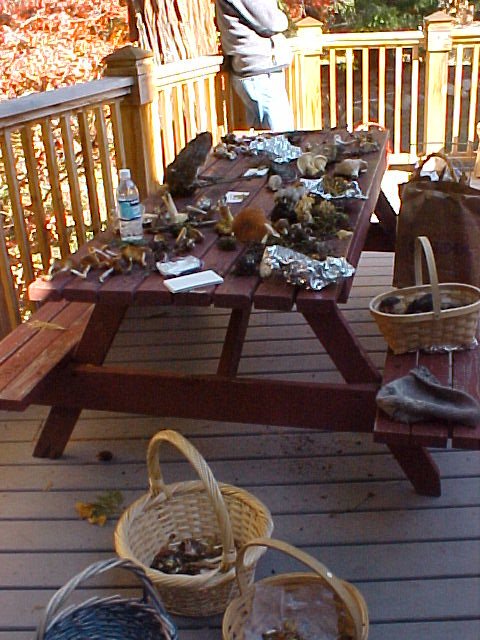
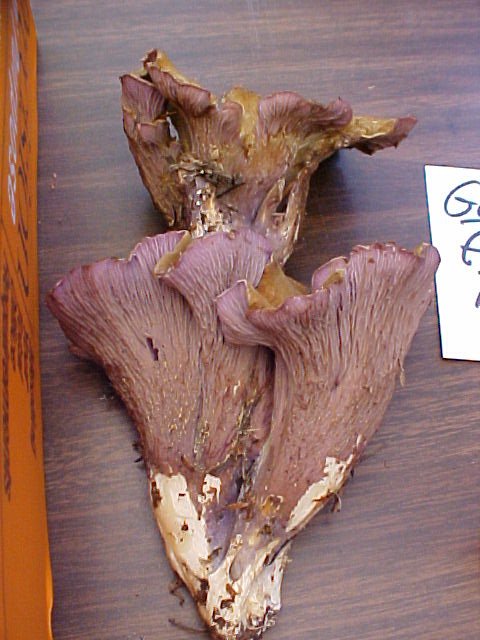
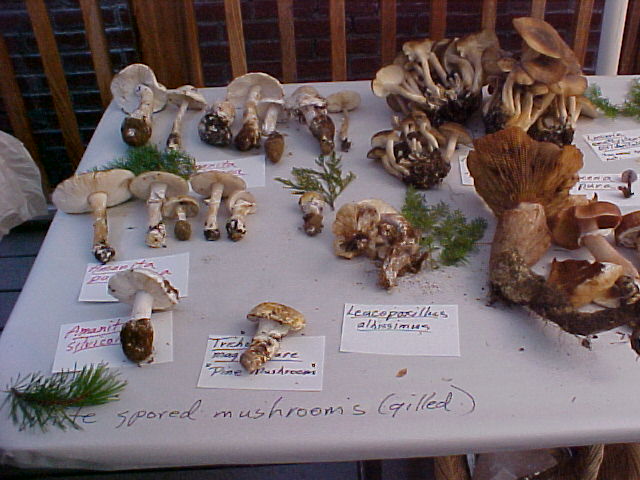
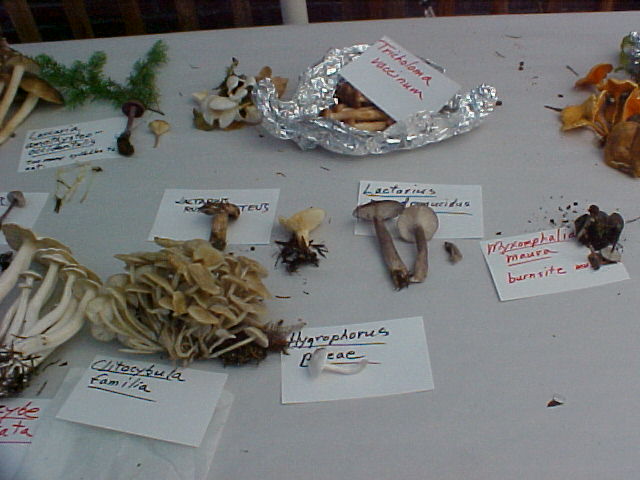
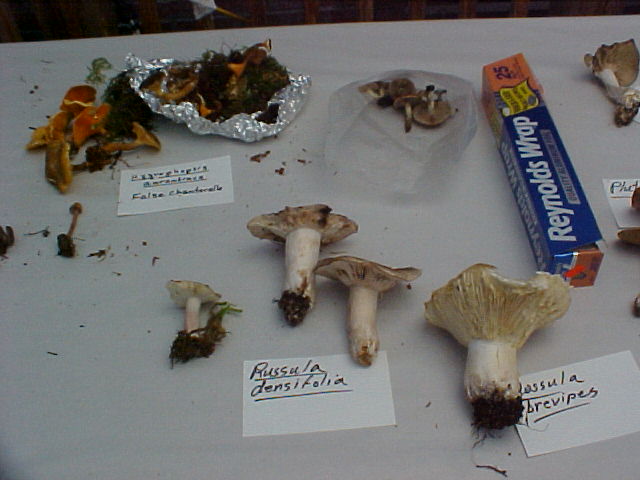
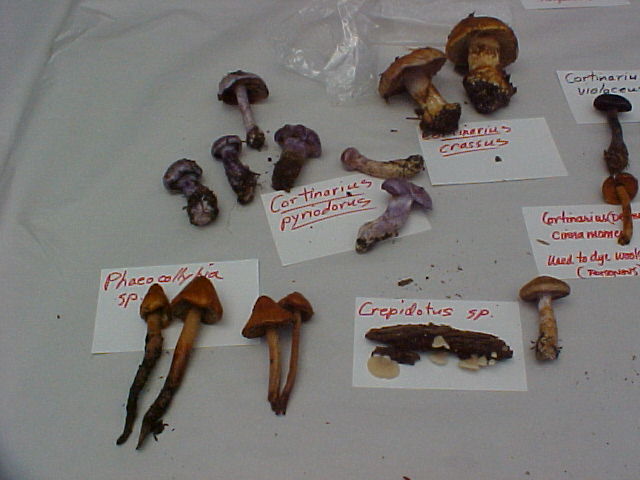
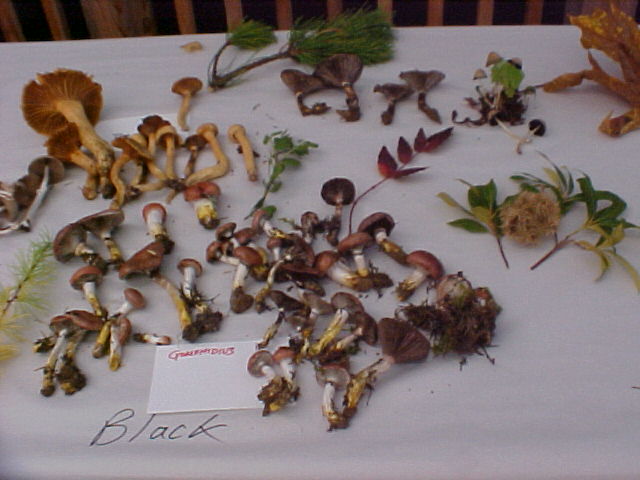
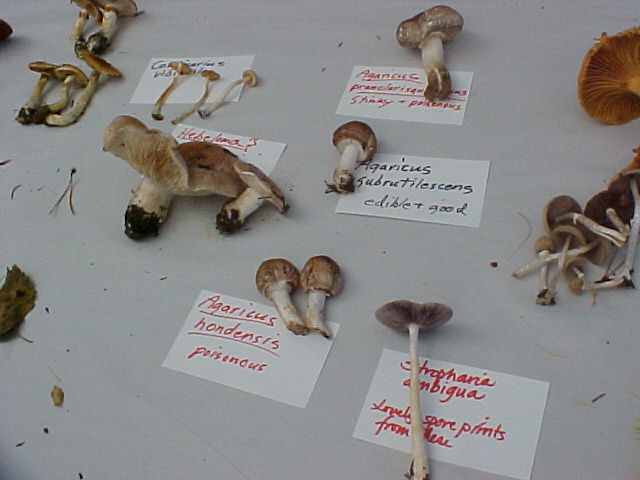
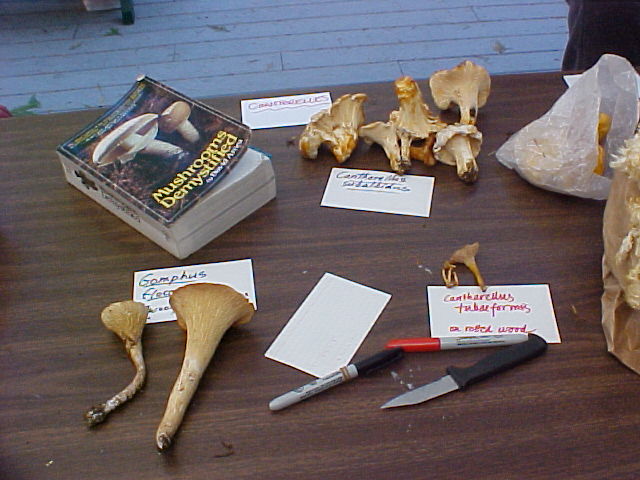
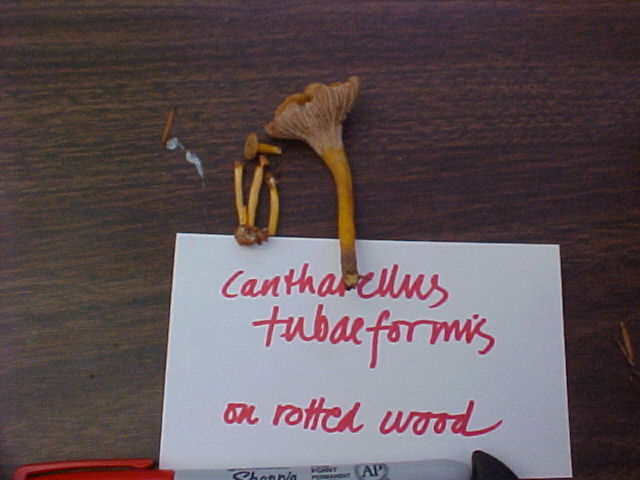
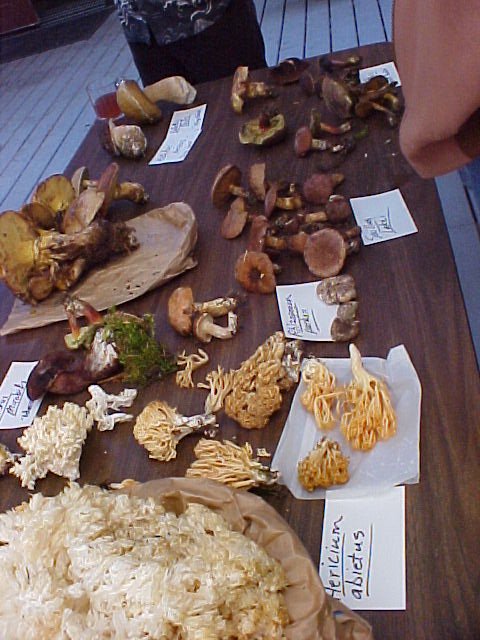
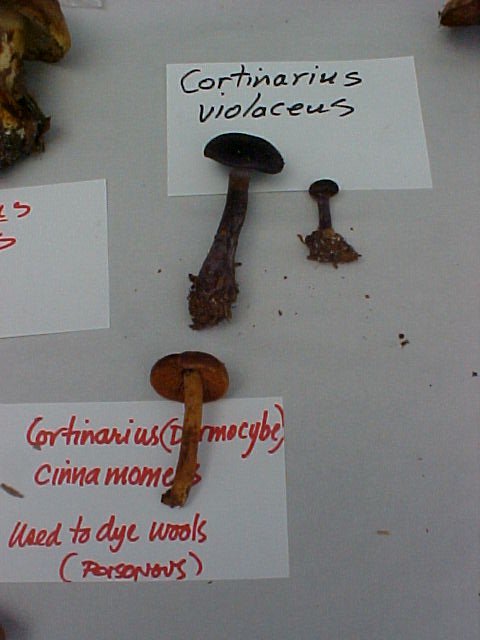
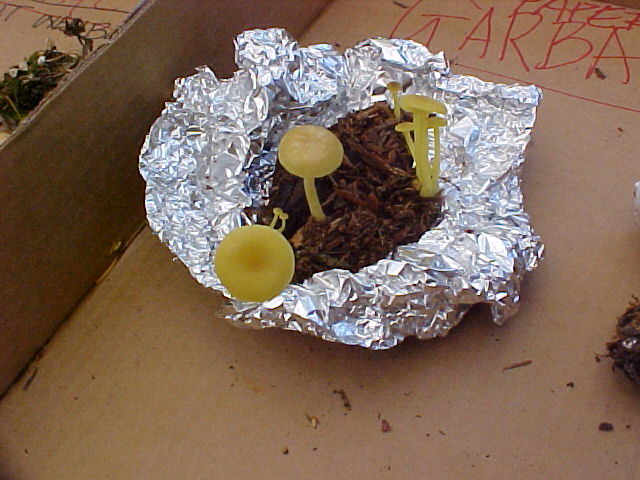
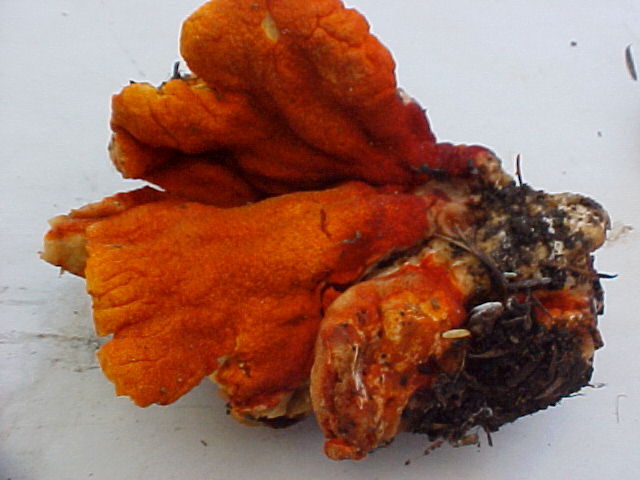
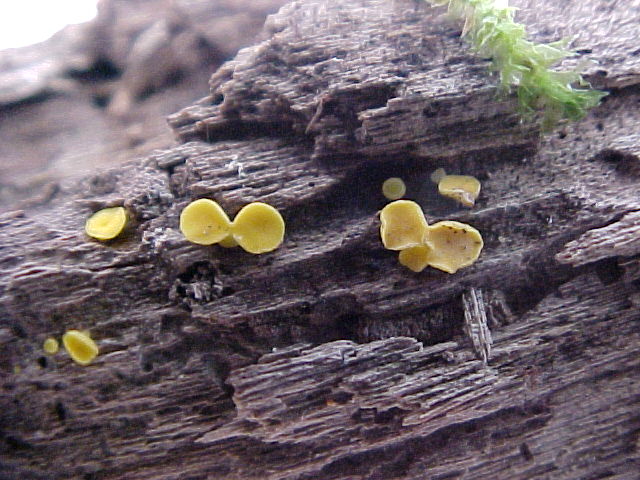
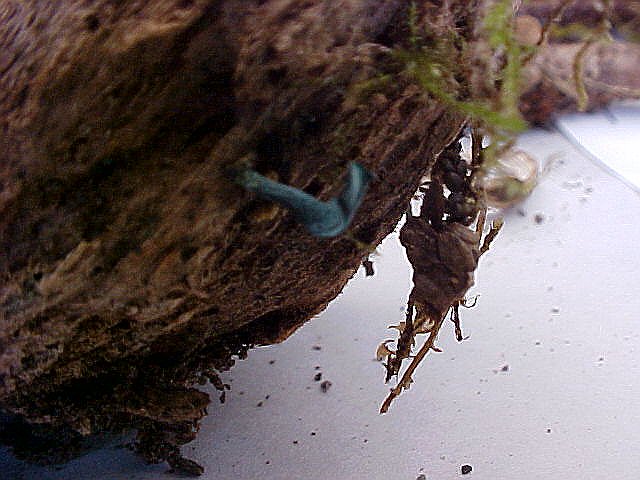
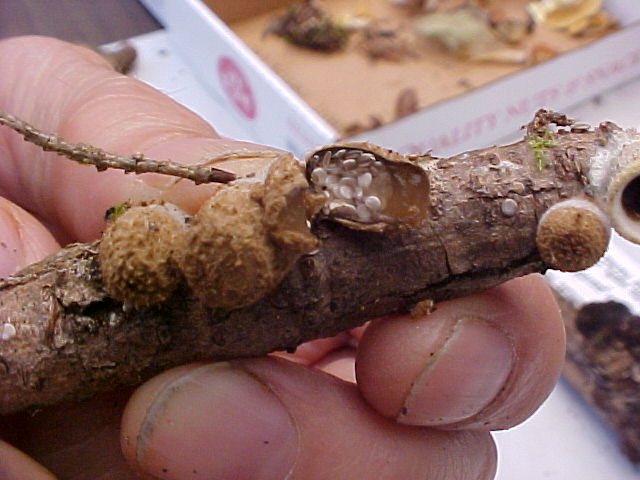
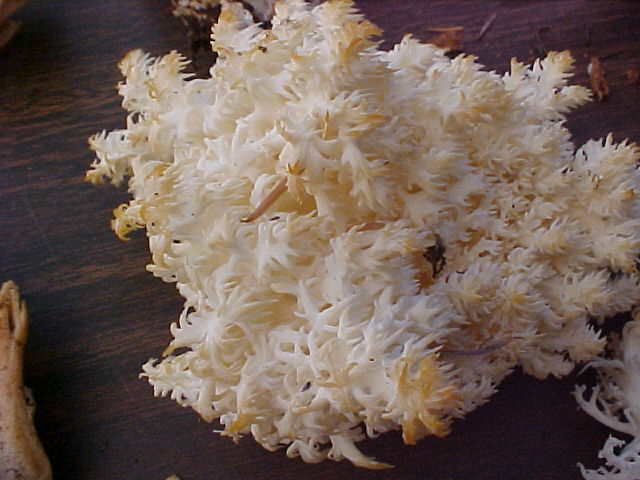
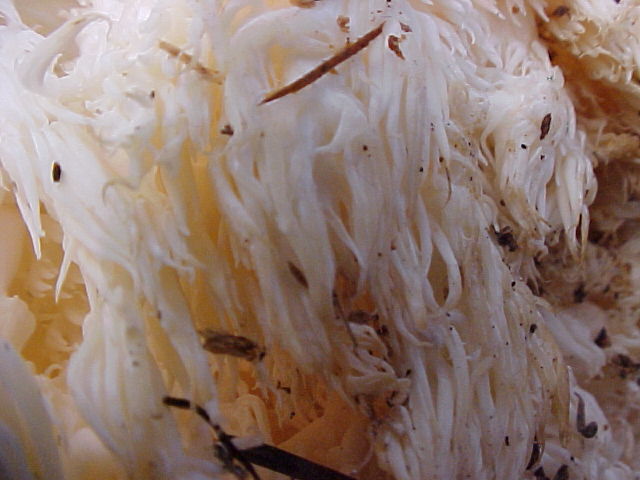
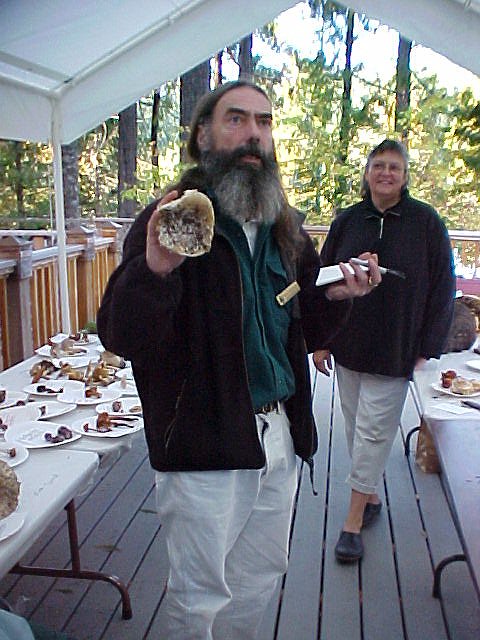
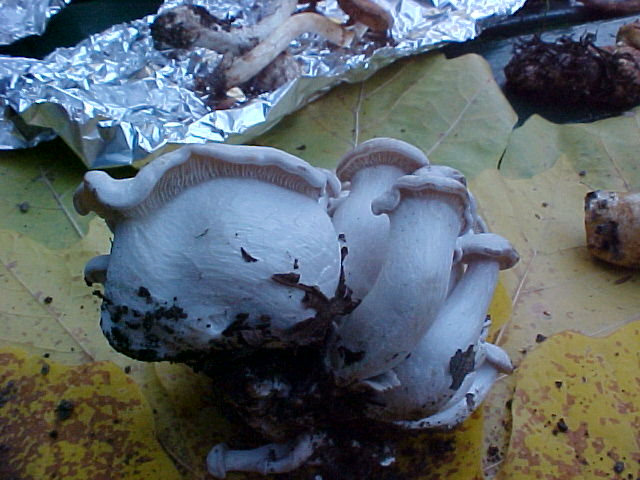
Special Issue Friday, the first foray (continued): When we all returned from our respective forays, we piled our collections on some tables that were placed outside the lodge, and the mushrooms were then sorted, identified, labeled, and put onto separate tables according to type and spore color, by Paul, Dr. Nancy Weber, and Maggie Rogers. Here are a few of the first day's collection: Click on any picture to see a larger image
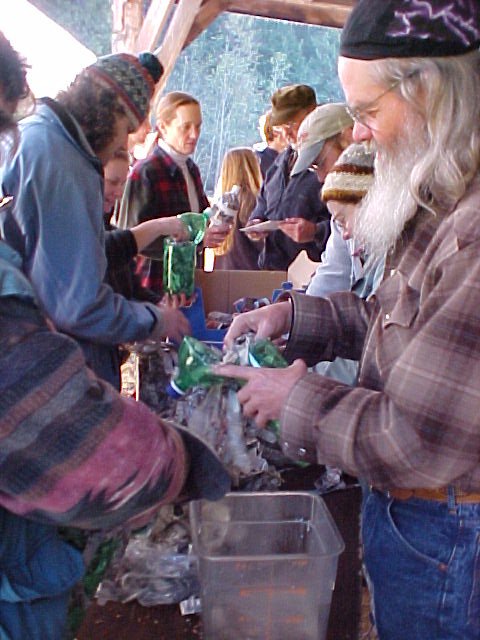
After lunch, we went to the lecture about mushroom cultivation and then to an outside workshop on making your own Oyster Mushroom farm (Pleurotus ostreatus).
After the workshop, we went to two more interesting lectures/demos: Mushrooms and Forestry in China, by Dr. Mo-Mei Chen, and Mushroom Dyeing, by Maggie Rogers. Just before dinner, we went outside to where Paul Kroeger and Dr. Nancy Smith Weber went to the collection tables and talked a bit about some of the mushrooms.
After dinner, we heard two more interesting lectures, the first one being presented by Paul Kroeger, about the ecology of hot springs, where he showed us slides and talked about a hot springs restoration project in Canada. The second lecture and slide show was given by Dr. Mo-Mei Chen about Eastern Medicinal and Culinary uses of mushrooms. During the lecture, we were able to see, smell, and taste dried samples of some of the different cultivated mushrooms from China. Page 3, Saturday > |